Spring is here, which means summer is knocking at the door. The arrival of summer heralds the increased use of one space in particular: the outdoors.
Whether that looks like grilling on the patio or yard games on the lawn, everyone wants to be outdoors. The grill comes out, the patio furniture is uncovered, and people start planning for backyard barbecues. During times like these, the door between the kitchen and the back of the house becomes a source of friction. Someone has to prop it open or play doorman whenever there’s food or trays of drinks to be brought from the patio to inside, or vice versa. The house was never designed for the two spaces to be shared, but adding an automation system to the doors can change that and create a better flow between the indoors and outside.
People Want to Spend Time Outdoors
People of all ages highly value time spent outdoors, whether it’s sitting on a park bench, unwinding with a book on the deck, or going for a walk. It’s no secret that fresh air makes us feel good. According to a poll conducted by the National Recreation and Park Association, 96% of adults in the United States spend time outdoors daily, with more than half spending at least 30 minutes outside and over a third spending more than an hour outdoors each day.
One of the easiest ways to spend more time outside is to improve access to the outdoors and reduce the obstacles between yourself and the time spent in fresh air. A spacious yard or nice patio makes time outside easy to come by; you don’t need to leave the house to enjoy the outdoors. For homeowners remodeling their homes, the top priority is upgrading the outdoor living space, according to a survey conducted by System Pavers. When Customers plan upgrades, thoughtful design across all facets of the indoor-outdoor space should be considered, including the door and automation system they’re using.
The outdoor remodel trend is reflected across markets, not only in the US. A poll by Australian masonry company Adbri Masonry found that over 68% of homeowners planned to make improvements to or undertake new projects on their front and backyard spaces. Customers are already investing heavily in their outdoor space; if their door doesn’t match or accommodate that vision, the whole project can feel flat or unfinished.
The Backyard Is Where People Entertain
The backyard is the primary entertainment space for many people during the summer months. When people host summer dinner parties and gatherings, they’re often held outdoors. In a survey conducted by the International Casual Furnishings Association, homeowners who updated their outdoor living space said they spent more time out there relaxing (72%), spending time with family and friends (60%), eating al fresco (55%), socializing (48%), and entertaining (44%).
The backyard is where people host and gather, and investments are already being made to improve this valuable space. A Houzz Australia Landscaping study reported that nearly one in two Australian homeowners use their outdoor space specifically for entertaining. The door between the hosting space and indoors will either support their vision or work against it. When Customers look to coalesce their indoor and outdoor spaces and make entertaining seamless, adding an automated door system can provide a straightforward way to remove the barrier between indoors and outside.
Don’t Let the Door Be a Bottleneck
Removing the barrier between the inside and outside isn’t a new trend. Between 2024 and 2025, homeowners have only become more willing to invest in their outdoor space, and 56% of experts cited indoor-outdoor coherent design as the biggest outdoor living trend of 2025, according to data collected by Fixr. Heavy pivot doors and large sliding systems in luxury homes can be physically difficult or demanding to operate, leading to an inelegant experience. The coherence of an indoor-outdoor space deteriorates every time the door draws attention to itself. While retrofit automation is possible, it can be costly and complicated; having the conversation before the door goes in saves time, money, and a lot of mess.
Architects and designers are already selling the seamless indoor-outdoor vision to Customers; Summit is what makes this vision function as intended, closing the gap between the idea and reality.
Automation Removes the Friction
The indoor-outdoor vision is already sold. Architects are designing for it, Customers are investing in it, and the door is the one element standing between the concept and the experience. Automation is what closes that gap, and the conversation is easiest before the door goes in.
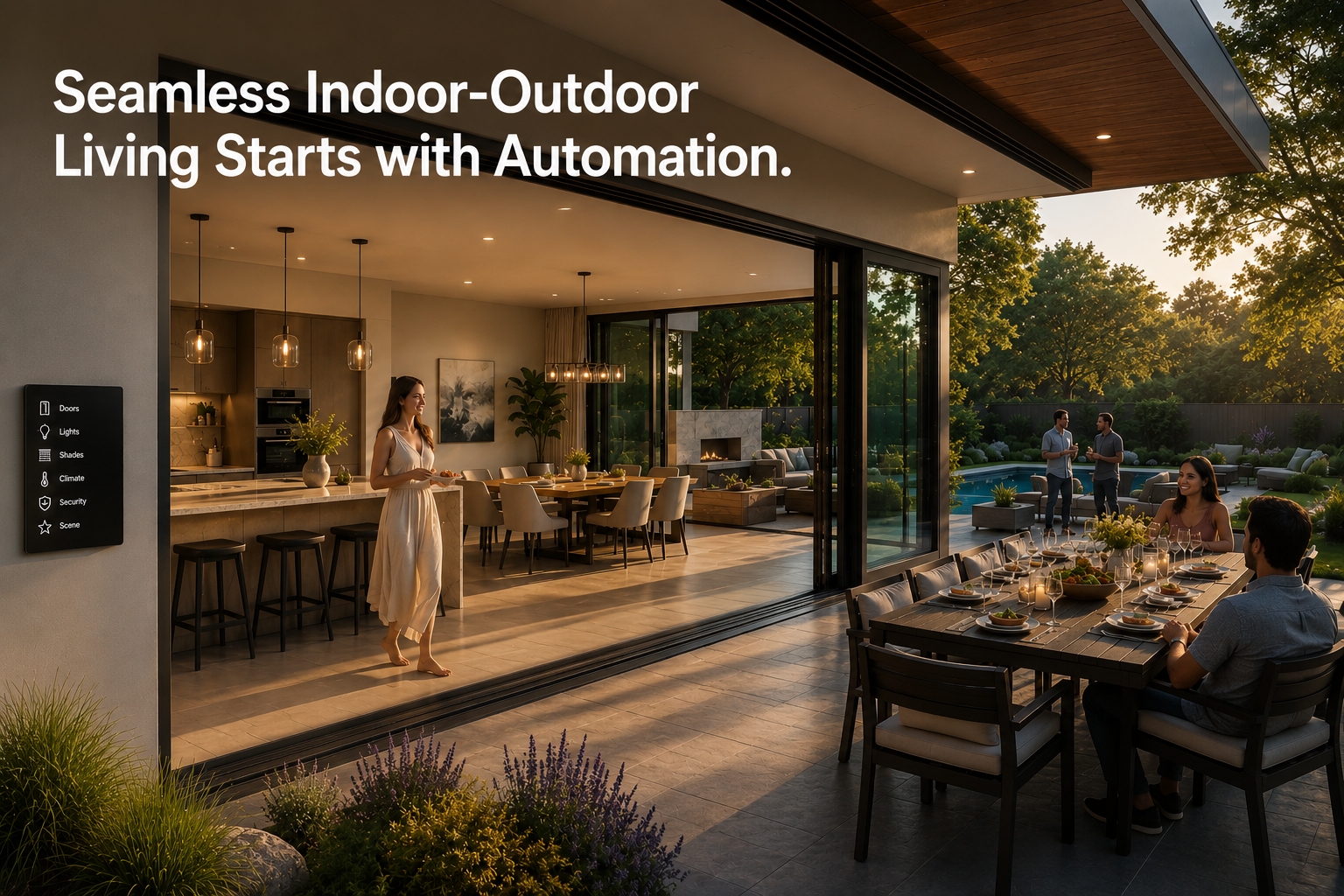
What automation delivers is a disappearing act. Consider what a dinner party looks like in a home where the door has been designed to match the space. Guests move between the patio and the living room freely all evening. The door to the outdoor kitchen stays open as long as it needs to, and when the temperature drops later in the night, a tap of a wall pad closes it without anyone pausing their conversation or leaving the table. Nobody thought about the door once.
That same invisibility shows up differently depending on the home and the moment. A homeowner with full hands approaching a large pivot door does not slow down or ask a guest for help; the motion sensor opens it before they get there. Parents hosting a summer afternoon in the backyard are not spending it stationed at the threshold managing traffic. The kids move freely, the adults stay with their guests, and the two spaces can function as one without anyone orchestrating it.
Summit Automation controls support all of these scenarios through wall pads, handheld touchpads, voice integration with Alexa and Google Home, and both visible and hidden motion detectors, giving homeowners flexibility in how the system fits into their lifestyle. Systems can be configured for sliding and stacking doors, pocket doors, pivot doors, and large or heavy door applications, covering the full range of luxury outdoor living project requirements.
Customers have already invested in the outdoor space; automation is what makes the door worthy of it.