Luxury homes have always been a showcase for the latest innovations in comfort, design, and technology. In recent years, the combination of home automation and artificial intelligence (AI) has transformed high-end residences into responsive, intelligent living environments. While automation provides the structure that allows devices and systems to work together, AI adds the ability to learn, adapt, and anticipate the needs of the homeowner and residents. Together, these technologies create homes that are not only convenient but also efficient, secure, and deeply personalized.
At its core, home automation refers to systems that allow devices in a home to be controlled automatically or remotely. Lights can turn on at specific times, heavy and large doors and windows can open at the touch of a button, thermostats can adjust to programmed schedules, and security systems can arm themselves when the homeowner leaves. Automation creates a framework where appliances, climate control, lighting, entertainment systems, and security devices operate through centralized controls or preset rules.
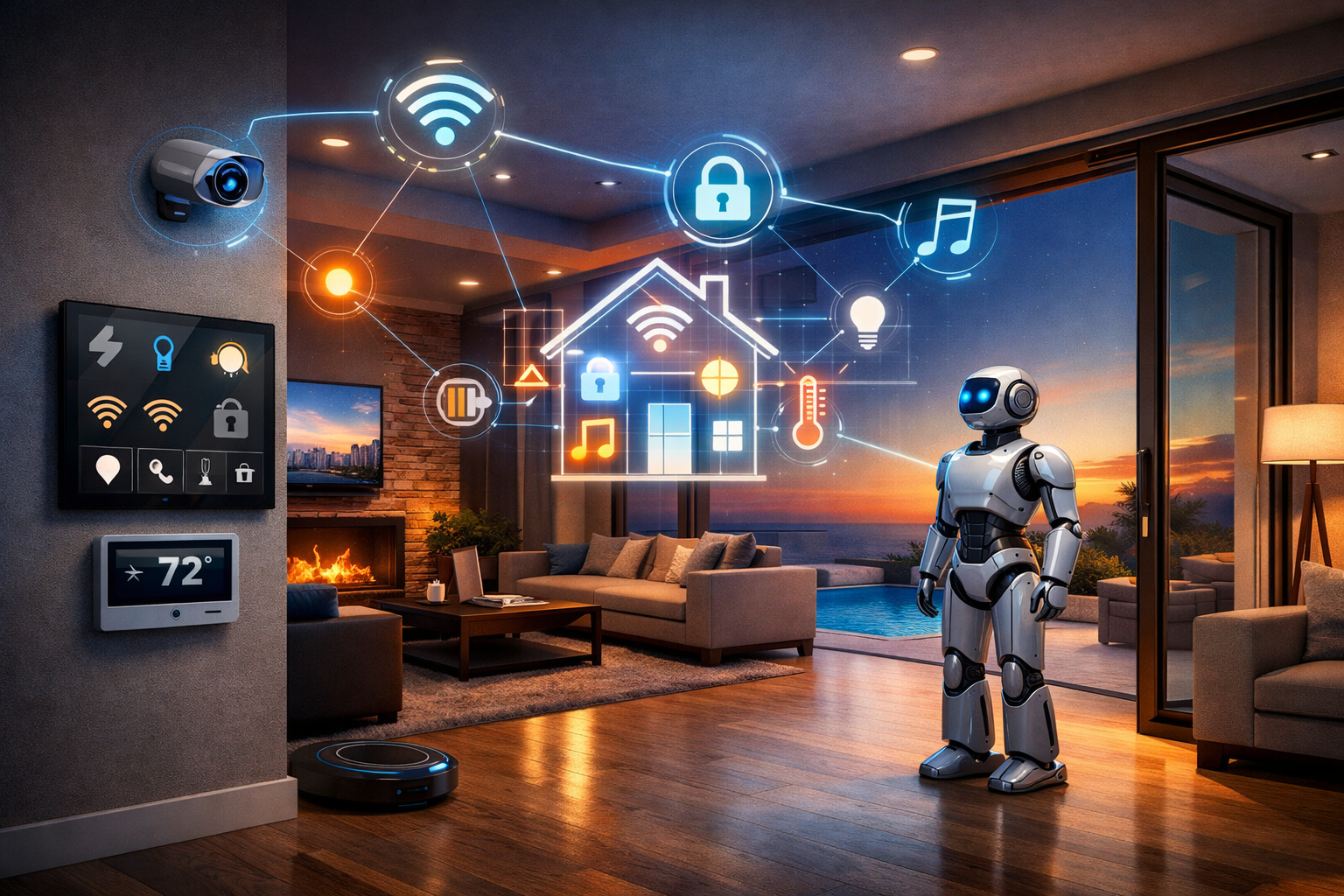
Artificial intelligence takes these capabilities much further. AI can analyze patterns, learn from behavior, and make decisions based on data gathered from sensors and user interactions. When integrated into an automated home, AI shifts the system from simple rule-based automation to intelligent assistance. Instead of only following instructions, the home can understand habits, preferences, and environmental conditions, adjusting itself accordingly.
One of the biggest benefits of combining automation and AI in luxury homes is personalized comfort. AI systems can learn how residents prefer their environment throughout the day. For example, the system may notice that the homeowner likes the living room lights dimmed in the evening while watching television, or that they prefer a cooler bedroom temperature at night. Over time, the AI automatically adjusts lighting, temperature, window shades, and even background music without the homeowner needing to touch a control panel.
Climate control is a particularly powerful example of this collaboration. Automated thermostats already allow scheduling and remote adjustments, but when paired with AI they become predictive systems. AI can analyze outdoor weather forecasts, indoor occupancy patterns, and historical usage to determine the most efficient way to heat or cool the home. In a large luxury property with multiple zones, this can lead to significant energy savings while maintaining perfect comfort in every room.
Energy efficiency is another major advantage. Luxury homes often include large spaces, pools, guest houses, and extensive lighting systems that can consume significant energy. AI can monitor usage patterns and automatically optimize power consumption. For instance, if the system detects that certain rooms are rarely used during specific hours, it can reduce heating, cooling, and lighting in those areas. Solar panels, battery storage systems, and electric vehicle chargers can also be coordinated through AI to ensure that energy is used and stored in the most efficient way possible.
Security and safety also benefit greatly from the integration of AI and automation. Traditional home security systems rely on motion sensors, cameras, and alarms that activate when triggered. AI enhances these systems by allowing them to interpret what they see. Instead of simply detecting motion, AI-powered cameras can distinguish between a passing animal, a delivery driver, or an unfamiliar person approaching the property.
This intelligent monitoring reduces false alarms while improving protection. AI can also recognize patterns that might indicate unusual activity. For example, if doors are opened at unusual times or if someone enters a restricted area of the home, the system can send alerts to the homeowner or activate additional security measures. Some systems can even communicate with local emergency services if a serious threat or safety issue is detected.
Luxury homes often incorporate advanced entertainment systems, and AI-driven automation can turn these into immersive experiences. Imagine walking into a home theater where the lighting dims, the projector activates, and the sound system adjusts automatically based on the number of people in the room. AI can remember preferred seating positions, audio levels, and even recommend movies or music based on previous viewing habits.
Voice control has also become a key component of AI-enabled smart homes. Residents can interact with the house using natural language commands, asking the system to adjust lighting, start a movie, or lock the doors. Over time, AI assistants become more accurate at interpreting speech patterns and preferences, making interactions smoother and more intuitive.
One of the most impressive features of AI-powered luxury homes is predictive automation. Instead of waiting for commands, the home anticipates needs. For example, if the system knows the homeowner typically arrives home around 6:00pm, it can prepare the house in advance. The driveway lights turn on, the garage door opens automatically, the climate control adjusts to a comfortable temperature, and soft music begins playing in the entryway.
Morning routines can also be automated. The home may gradually raise the bedroom shades to simulate sunrise, start the coffee maker in the kitchen, warm the bathroom floors, and display the day’s schedule on a smart mirror. All of these actions occur seamlessly through a combination of automated rules and AI learning.
Luxury kitchens and appliances are another area where automation and AI are working together. Smart refrigerators can track groceries, suggest recipes based on available ingredients, and automatically add items to a shopping list when supplies run low. AI-powered ovens can recognize the type of food being cooked and adjust temperature and cooking time to achieve the best results.
Another fascinating application is health and wellness monitoring. Many luxury homes now include fitness rooms, spa areas, and wellness technology integrated into the home automation system. AI can track exercise routines, monitor sleep patterns, and adjust environmental factors such as lighting and air quality to support better health. For instance, circadian lighting systems can shift color temperature throughout the day to match natural sunlight, helping regulate sleep cycles and improve overall well-being.
Maintenance and home management are also becoming smarter. AI systems can monitor the performance of appliances, HVAC systems, plumbing, and electrical equipment. If a system begins to show signs of wear or inefficiency, the AI can notify the homeowner before a failure occurs. This predictive maintenance helps prevent costly repairs and ensures that all home systems continue to operate at peak performance.
In luxury homes with large outdoor areas, AI and automation extend beyond the interior. Smart irrigation systems can monitor soil moisture and weather forecasts to water gardens only when necessary. Pool systems can automatically maintain chemical balance and temperature. Outdoor lighting can adjust brightness based on activity or time of night, enhancing both safety and ambiance.
Ultimately, the combination of automation and AI transforms luxury homes into intelligent environments that adapt to their occupants. Instead of homeowners constantly managing devices and systems, the house becomes a partner in daily life by anticipating needs, conserving resources, and enhancing comfort.
As technology continues to evolve, the capabilities of AI-powered home automation will only expand. Future systems may become even more intuitive, learning emotional cues, coordinating with wearable devices, and integrating with smart cities and energy grids. For luxury homeowners, the result will be residences that are not only beautiful and comfortable but also remarkably intelligent.